
Stone & landscape project guides Plan it once.
Order it right.
What each kind of project takes, how to measure it, and a calculator for the loose materials. Bring it to the yard and the team will confirm the details.
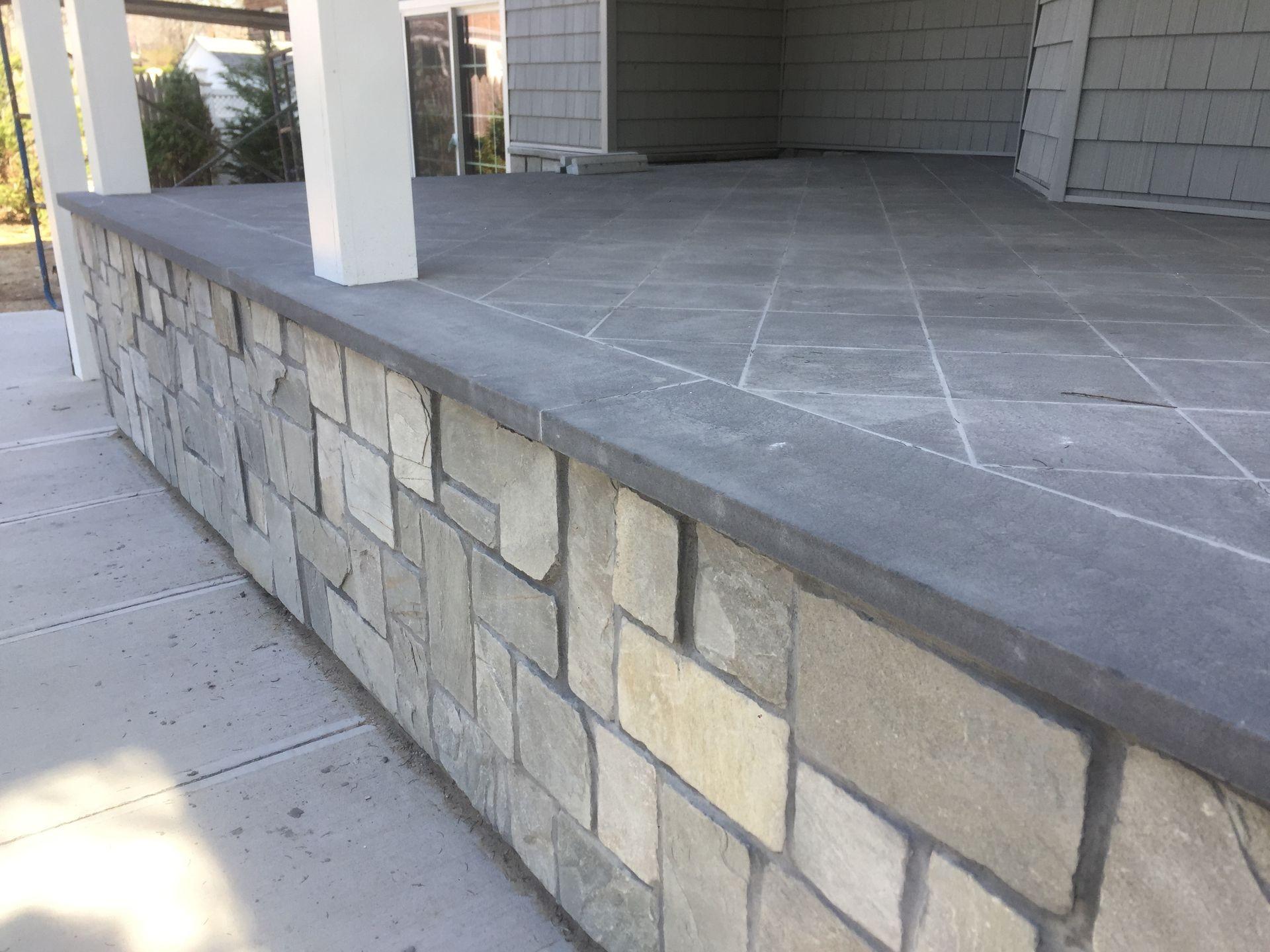
A patio
Flat stone or pavers on a compacted base, with sand or gravel to set them.
You’ll need
Measure
Length × width for the area. Ask your installer for the stone thickness and base depth.
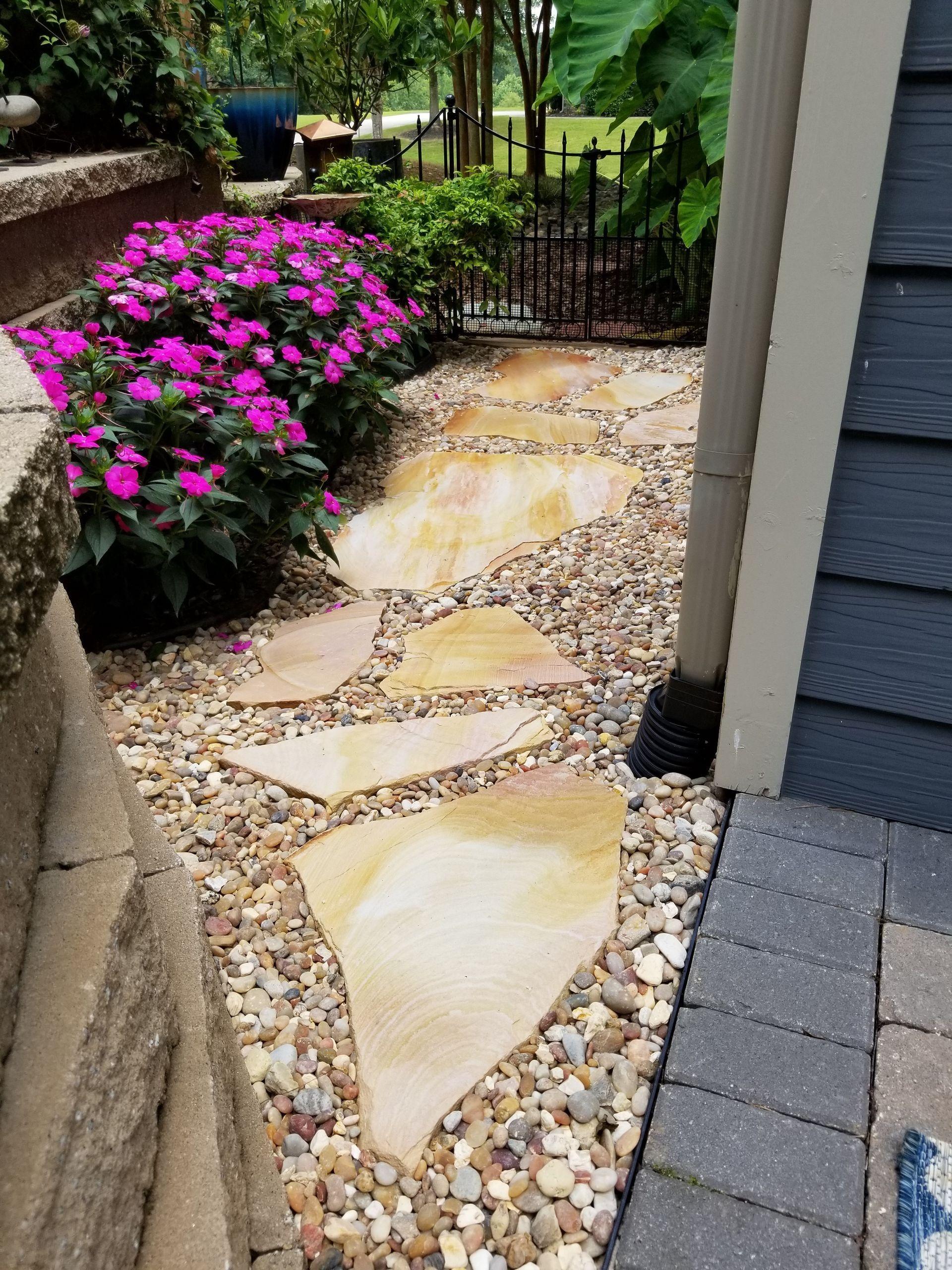
A walkway or stepping stones
Flagstone steppers or a laid path, often edged or filled with decorative gravel.
You’ll need
Measure
The path's length and width. For steppers, pace it out and count one stone per step.
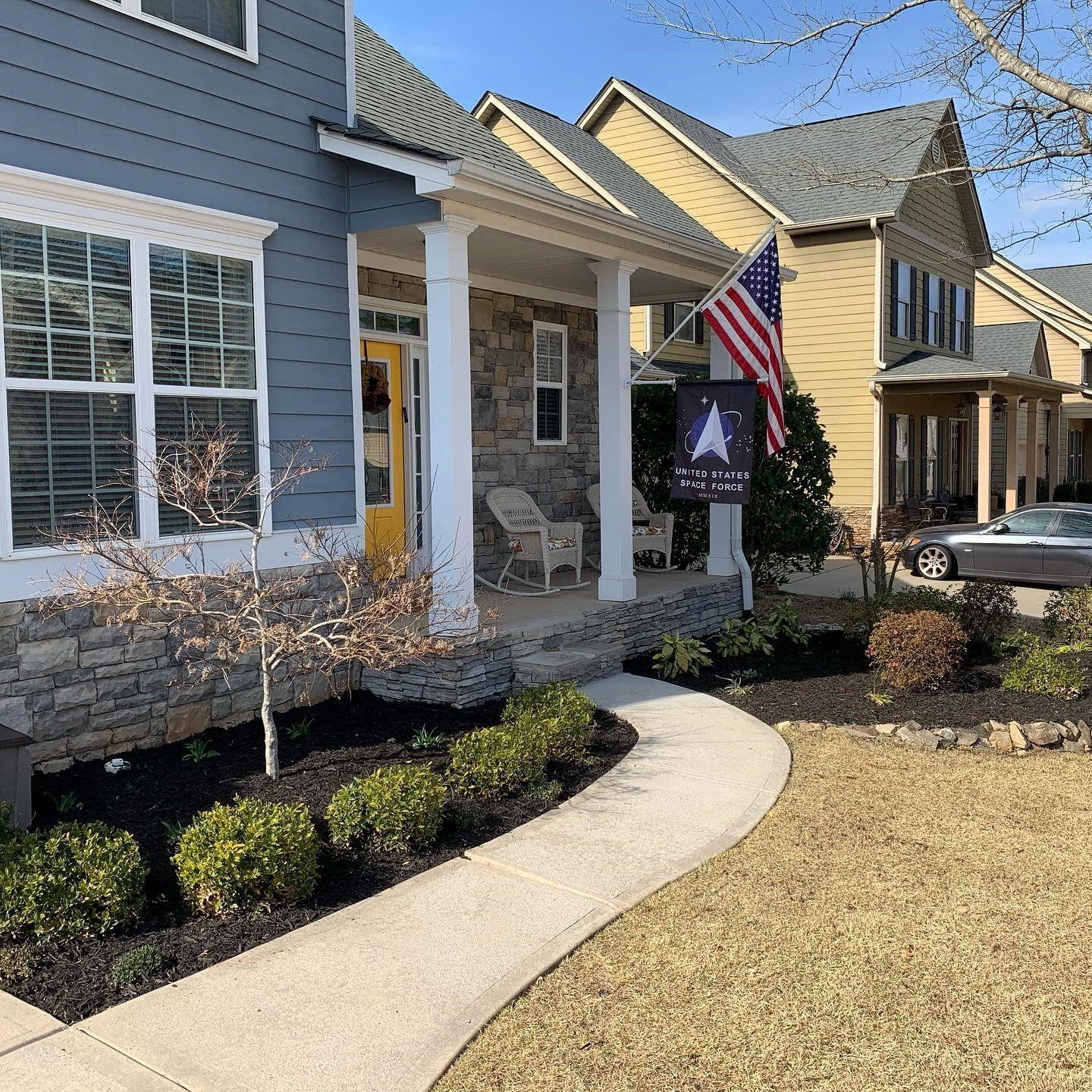
Garden beds
Good soil underneath, then mulch or pine straw on top to hold moisture and finish the look.
You’ll need
Measure
Each bed's length and width, and the depth you want. Split curved beds into rough rectangles.
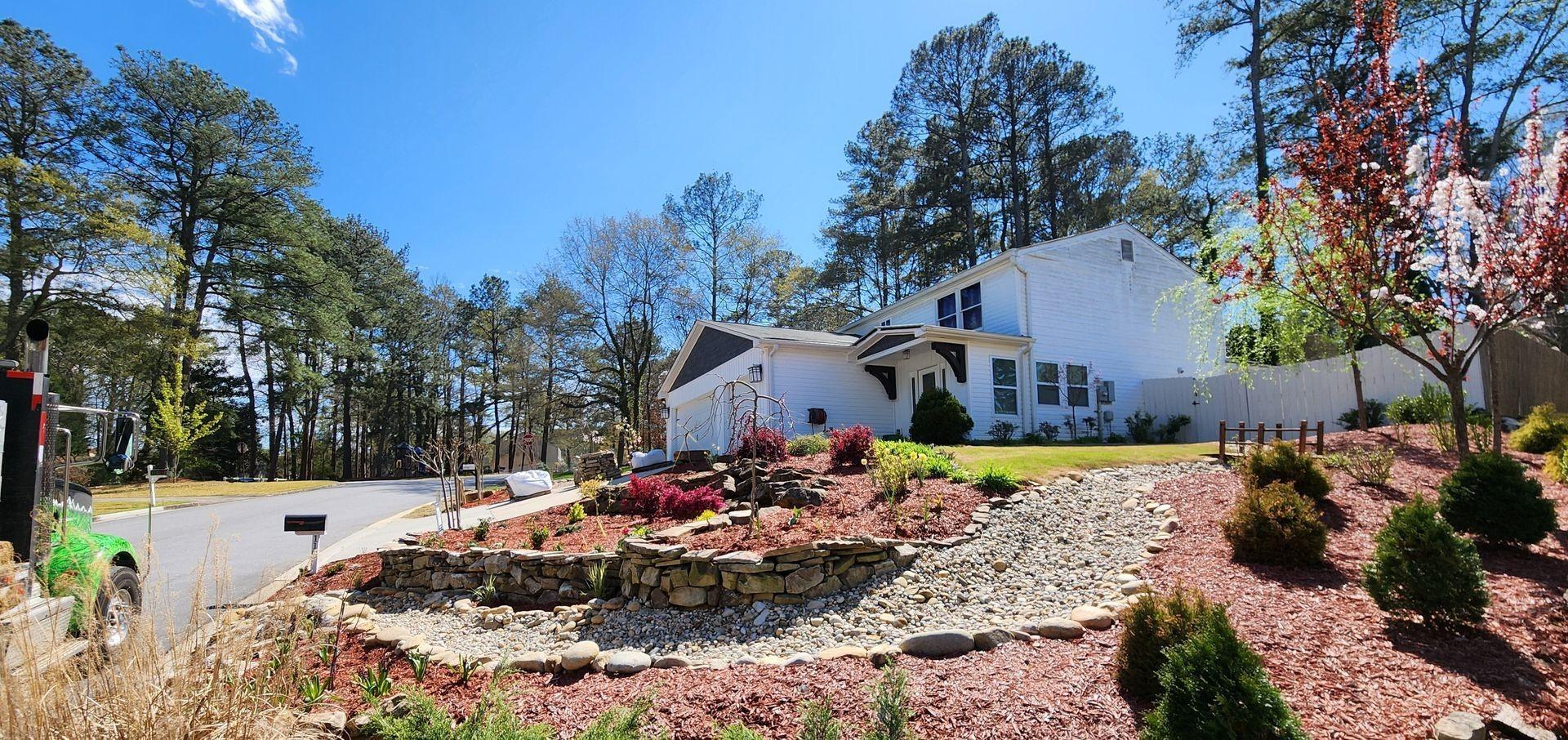
A dry creek or drainage
River rock and boulders to carry water, with fabric and pipe where it needs to move underground.
You’ll need
Measure
The run's length and average width. Note where the water starts and where it should go.
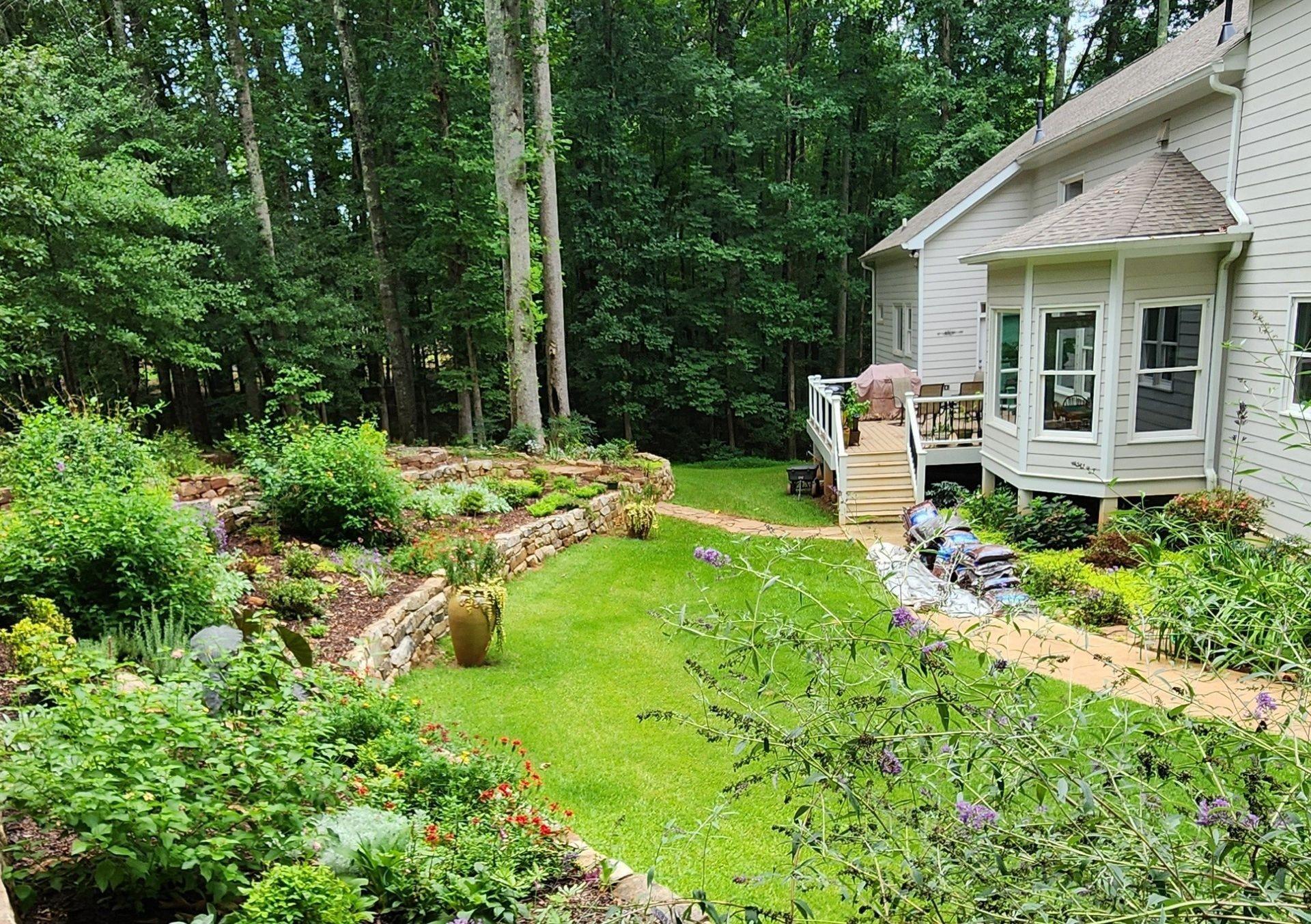
Walls and terraces
Fieldstone and wall stone to hold a slope, level a lawn or edge a raised bed.
You’ll need
Measure
The wall's length and height, face on. Taller walls need an installer's plan first.
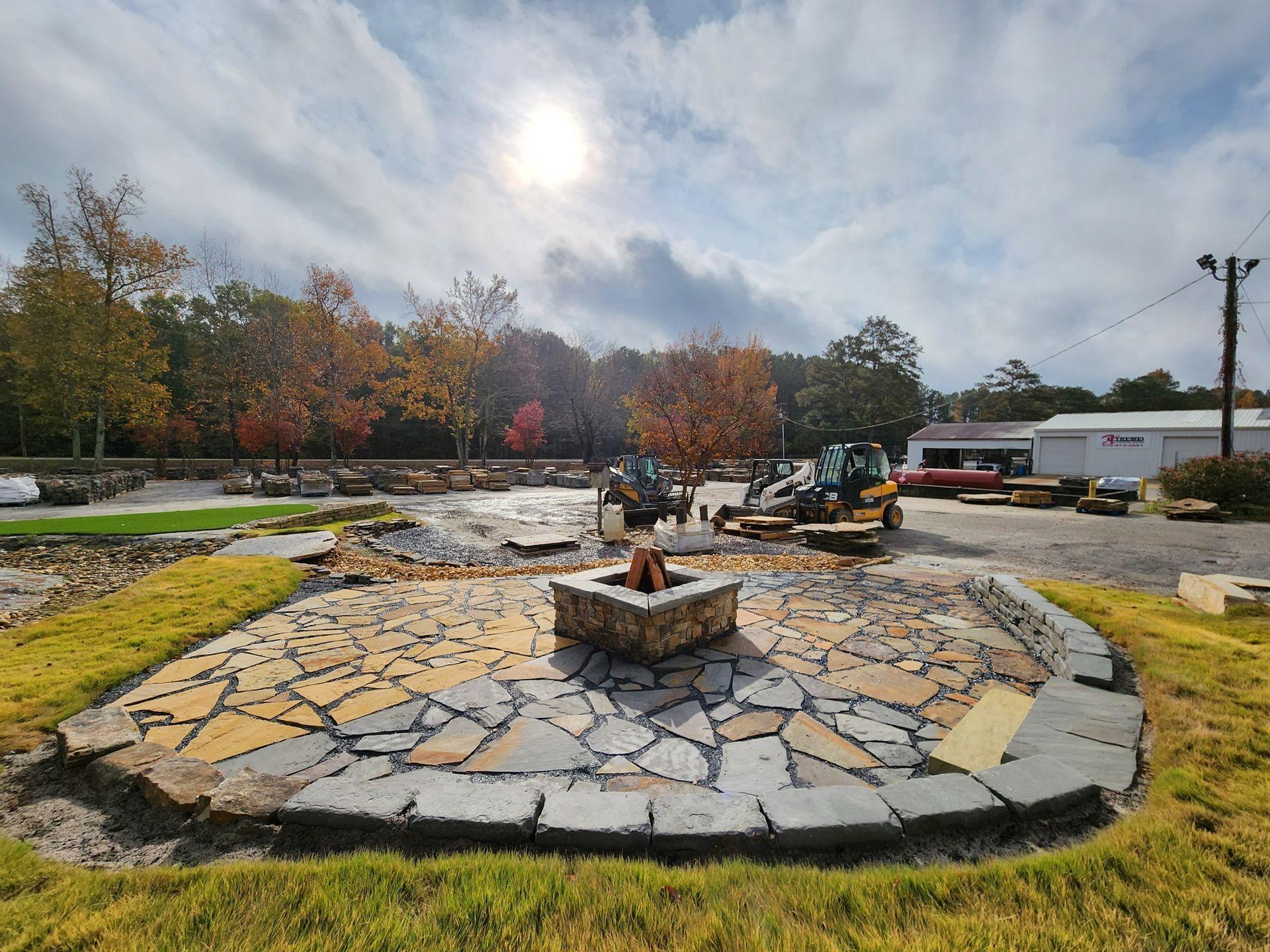
A fire pit or fireplace
Stone for the surround, fire brick and clay for the inside, and a surface to gather on.
You’ll need
Measure
The pit's outside diameter, and the patio around it as length × width.
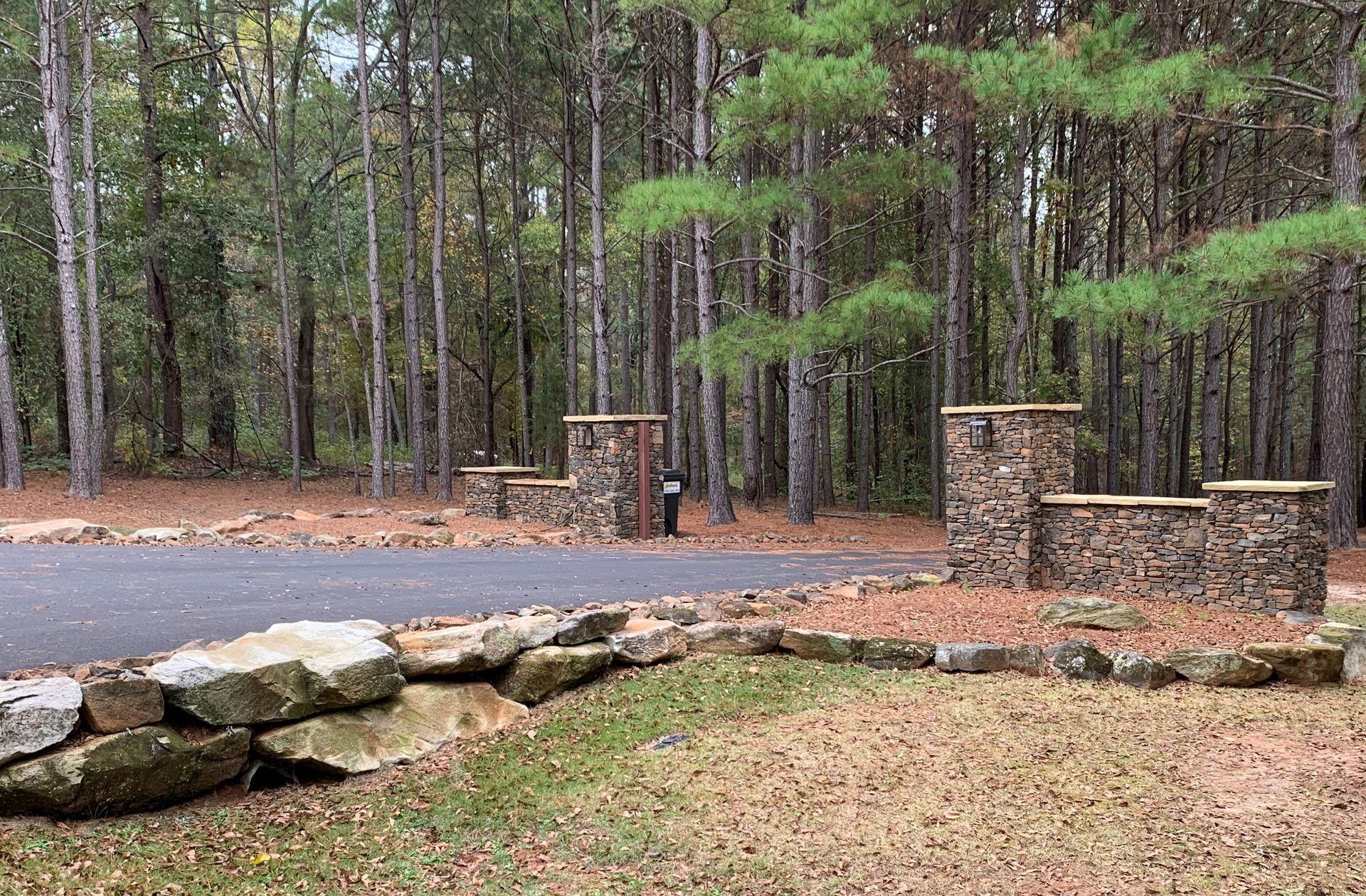
A driveway or entrance
Crushed stone and gravel in layers, with stone pillars or boulders to mark the way in.
You’ll need
Measure
Length × width × depth. Long drives usually come by the truckload, so check delivery access.
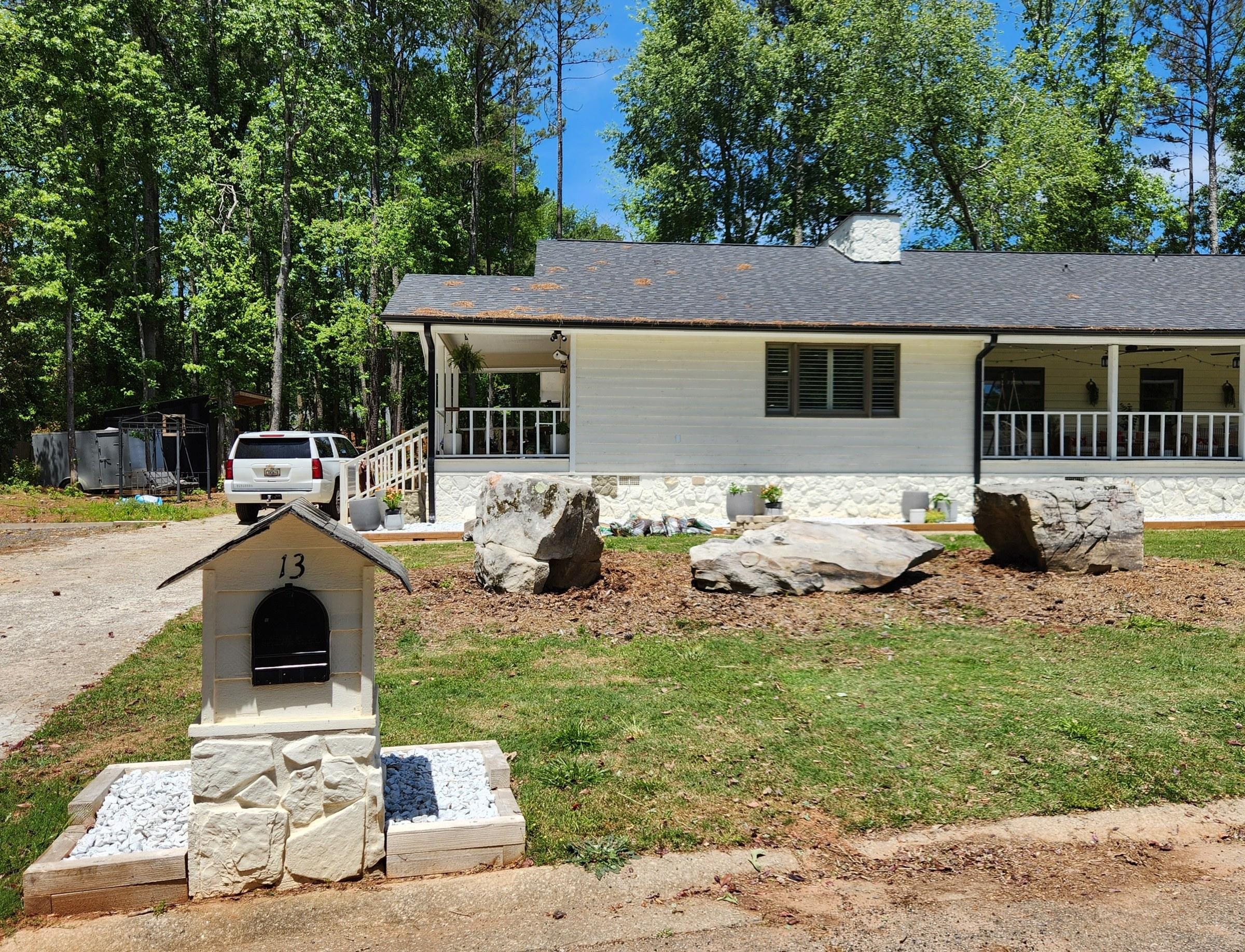
Boulders and features
Single stones for a bed, a border or a seat, chosen in the yard and set where you want them.
You’ll need
Measure
Photos of the spot and the rough size you picture. Pick the stone itself at the yard.
Measure before you order
Three steps to
a good number.
Break it into shapes
Split the space into rectangles and measure each one. Curves and corners only need to be close.
Measure length and width
In feet, at the widest points. Multiply them for the area of each shape, then add the shapes together.
Decide the depth
Loose materials are ordered by volume, so depth matters. Your installer can confirm it for base layers.
Measure before you order
A little planning.
A better starting point.
Estimate the loose volume for a rectangular area. Use your intended material depth, then confirm the order quantity with our team.
Length × width × depth ÷ 324 = cubic yards, with length and width in feet and depth in inches. This estimates volume, not weight or installed stone coverage.
Next steps
Turn the plan
into an order.
The Stone Source
More from the yard.
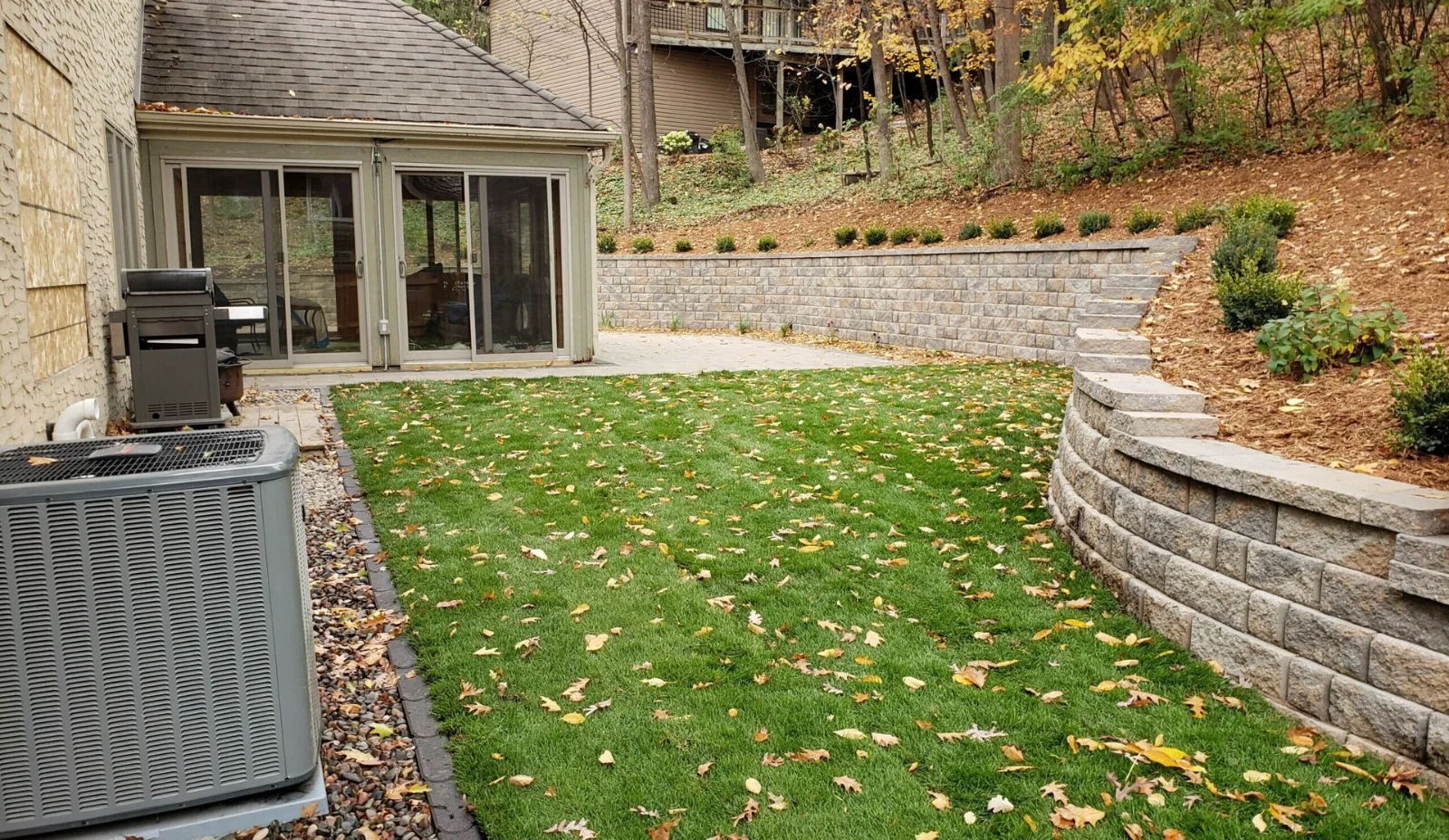 Maximizing Space with Belgard - Retaining Wall SystemsHow a Belgard retaining wall system turns a sloped yard into usable space, from level lawn to extra parking, and what it takes to build one that lasts.
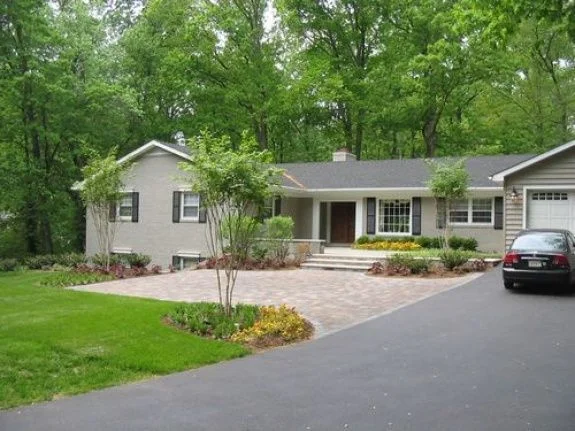 Back to School Landscaping Tips: Parking Pads & Playground Safety UpgradesParking pads for new teen drivers and refreshed playground mulch: two smart landscape upgrades to make before the school year starts.
 Vining Stone's Billboard Campaign Sparkles with Natural StyleFieldstone is forever. Limestone is a girl’s best friend. A look at the billboards turning heads across Georgia, and the stone behind them.